
Marketing & Creative Operations Expertise
OPERATIONS
PRODUCTION
PROJECT MANAGEMENT
Creative operations is often treated as a support function. I see it as a performance multiplier.
Strong creative leadership isn’t just about taste and ideas—it’s about building systems that allow great work to happen consistently, on time, and at scale. That belief is why I’ve spent a meaningful portion of my career focused on creative operations alongside hands-on design and direction.
I’ve seen the difference firsthand. A project can look “successful” on the surface while quietly running over budget, dragging on timelines, and burning teams out through endless revisions. Operational fluency changes that. When budgets, resourcing, tools, and expectations are clearly defined upfront, teams move faster, collaborate better, and produce stronger work with fewer surprises.
The real advantage is repeatability. You’re not just delivering one good project—you’re delivering good outcomes again and again, across teams, stakeholders, and time.
It’s the difference between being a great home cook and being a great chef running a busy restaurant every night. Talent matters. Systems make it sustainable.
Project Management Tools
Across multiple roles, I’ve been brought in not just to use project management tools, but to help select, implement, and operationalize them at scale.
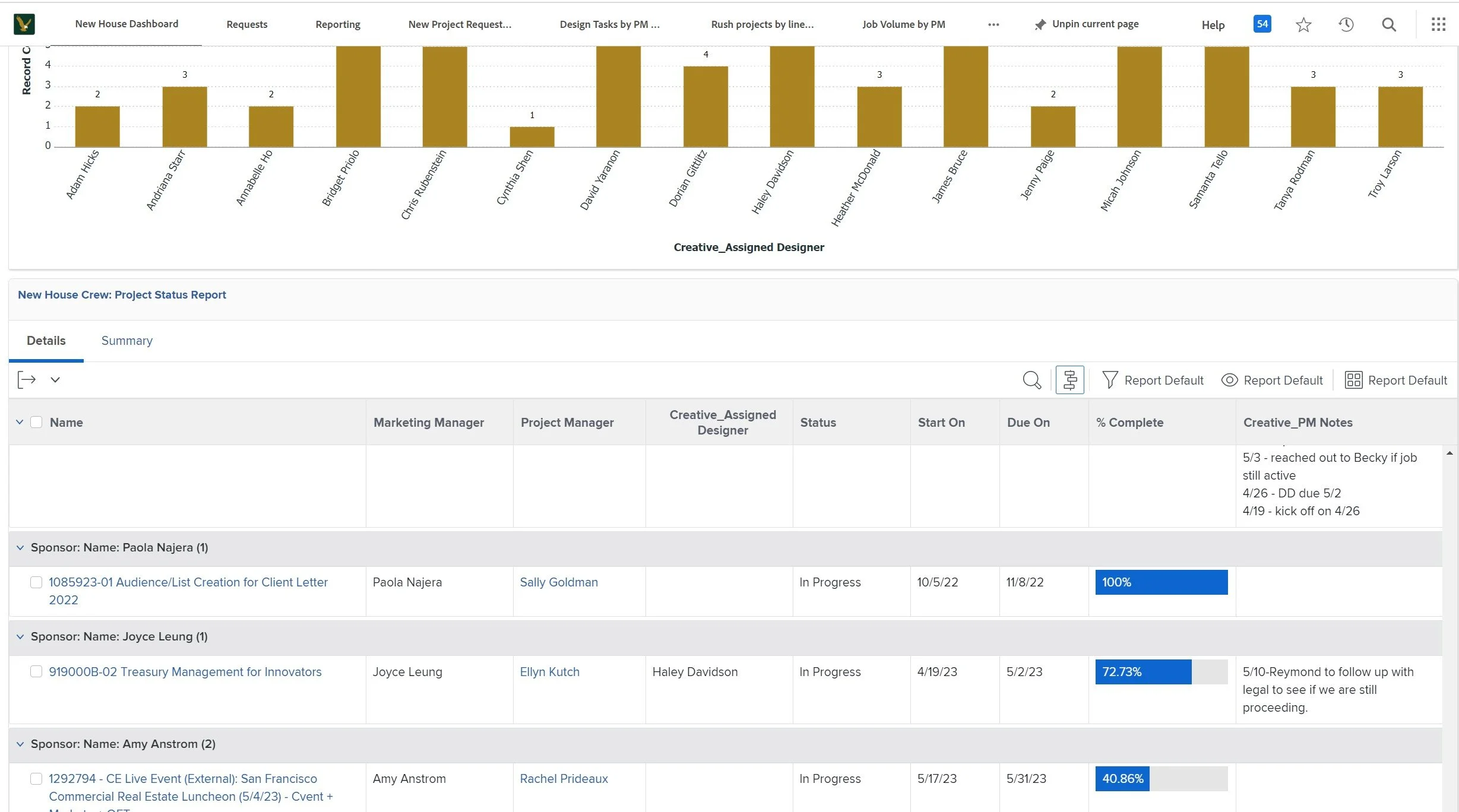
At Spruce, a Google Ventures–backed fintech startup, our small Marketing team initially adopted Asana to support collaboration during a major website build. The success of that effort led to broader adoption across Marketing. As our needs grew, I became directly involved in evaluating more robust platforms and helped lead the transition to Wrike. Due to my involvement in the vetting and rollout—and the lack of a dedicated system owner—I naturally stepped into the role of platform administrator, configuring workflows, permissions, and usage standards.
A few years later at First Republic, my experience with job and project management systems was a key reason I was hired as Production Manager. One of my first responsibilities was leading the evaluation and onboarding of a new enterprise-grade solution. After extensive research and trial testing, we selected Workfront, where I again served as System Administrator—overseeing implementation, governance, and day-to-day operation for the team.
Tackling Process Improvements
At First Republic, the volume of incoming work quickly outpaced the size of the Creative Services team.
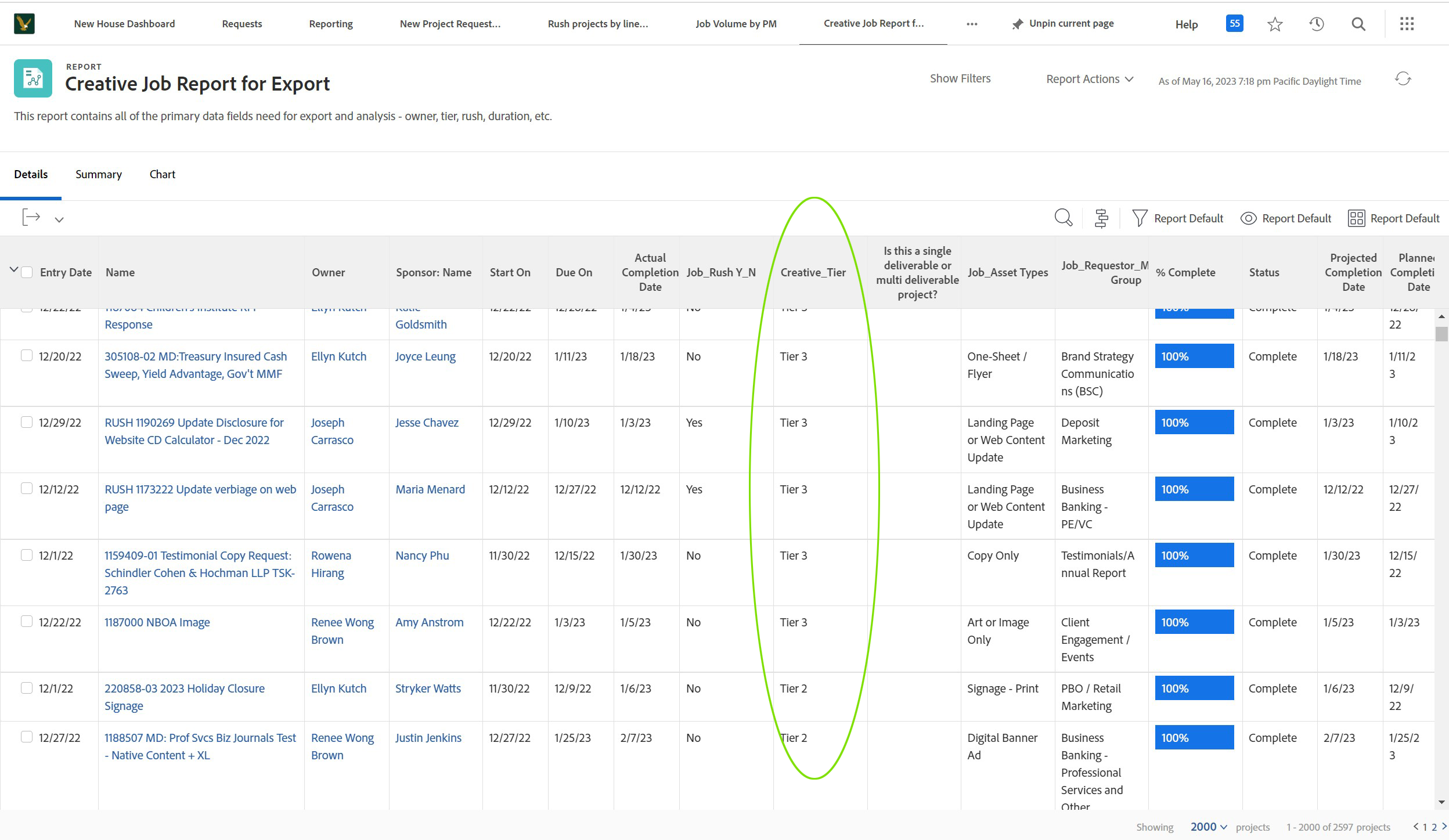
I proposed and helped implement a tiered intake system to classify work by complexity and effort, enabling more accurate resourcing and cost transparency. After training project managers and rolling out the model, the team saw immediate improvements in planning efficiency, stakeholder alignment, and cost control.
While common in agency settings, this approach was new for the team and became a foundational part of how creative work was scoped and managed.
Restructuring the Creative Department
During the COVID lockdown, the shift to fully remote work exposed gaps in how our creative team partnered with Marketing—particularly around consistency, ownership, and relationship-building.
I proposed restructuring the department into three smaller, cross-functional “crews,” each with a dedicated Creative/Art Director, project manager, designers, and copywriters aligned to specific stakeholders. This model created clearer accountability, stronger relationships, and more predictable outcomes.
After approval from the CMO and buy-in from Marketing leadership, the impact was immediate: improved collaboration, more consistent creative, faster turnaround times, and an increase in internal NPS from 70 to 80.
Exploring AI
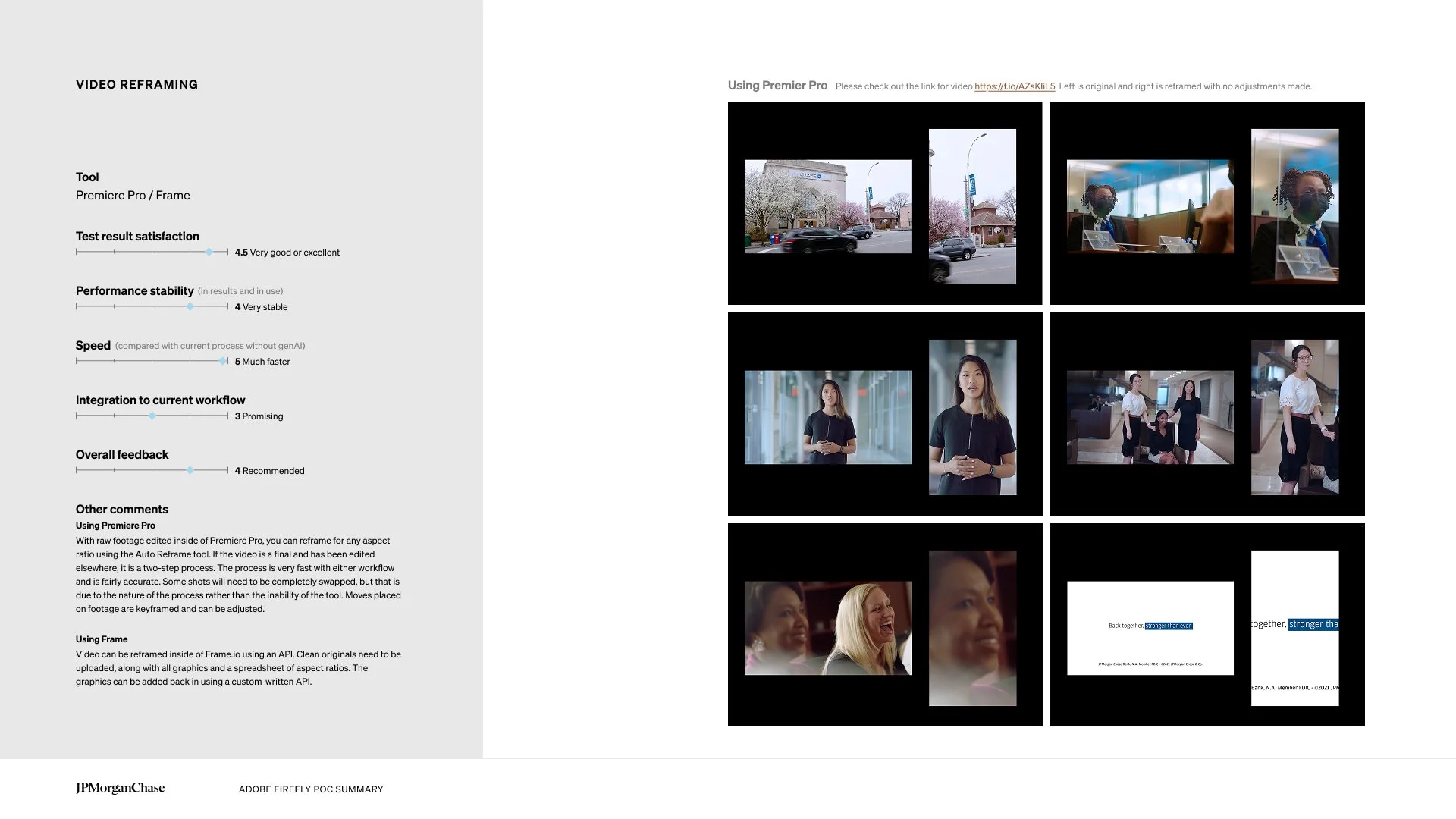
At JPMorgan Chase, I helped lead a pilot program focused on evaluating generative AI tools for potential integration into the Brand team’s creative workflows.
Working with a cross-functional “tiger team” of visual designers, copywriters, and video editors, we tested and compared multiple AI platforms using a defined set of criteria, including quality, usability, risk considerations, and workflow fit. The goal was to identify tools that could responsibly augment creative output while improving efficiency.
The pilot produced clear recommendations for platform adoption and demonstrated the potential to save several hours per project, while maintaining brand standards and creative quality.


I’ve always found myself working at the intersection of making things look good and making things run well.
Alongside creative work, I’m wired to tinker—streamlining workflows, improving processes, and optimizing systems so teams can do their best work with less friction. That mindset is what consistently draws me into operational roles and process improvements that set teams up for long-term success.